
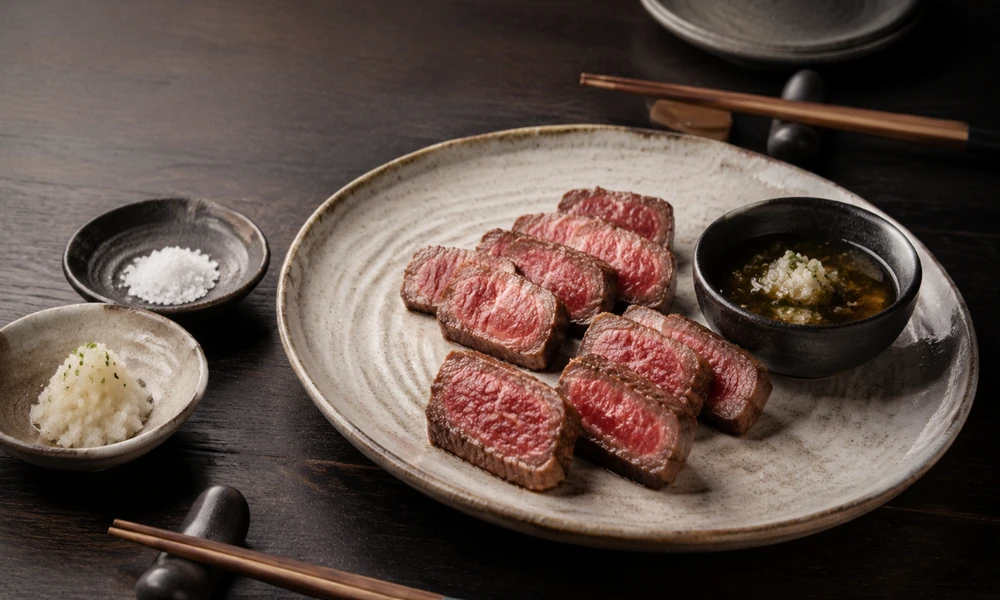
A plate of Wagyu can look surprisingly modest compared with a traditional steak dinner. Instead of one large cut filling the plate, diners may receive several carefully sliced pieces or a small portion intended for sharing. This presentation is not simply about appearance or exclusivity. It reflects the beef’s marbling, richness, preparation requirements, and role within a balanced meal.
Marbling Changes the Eating Experience
Wagyu is known for intramuscular fat, commonly called marbling. These fine streaks of fat run through the muscle rather than sitting only around its edges. The amount and distribution of marbling vary by cut, grade, and type of beef, but highly marbled Wagyu has a noticeably different texture from leaner steak.
As the meat cooks, some of the fat softens and renders. This contributes to a tender mouthfeel and carries flavor across the palate. A relatively small bite can therefore deliver an intense combination of beefiness, richness, and moisture.
Because each bite is concentrated, a large steak-sized serving may feel overwhelming. Smaller portions allow diners to appreciate the marbling without becoming fatigued by the richness.
Richness Encourages Slower Eating
Lean meat often depends on a generous portion to create a satisfying main course. Highly marbled beef provides a different kind of satisfaction. Its richness encourages diners to take smaller bites, chew slowly, and notice changes in texture and flavor.
The first bite may seem buttery and delicate, while later bites reveal a deeper roasted character from the seared exterior. Serving less meat helps preserve that contrast. If the portion is too large, the palate may become accustomed to the fat, and the distinctive qualities can become less noticeable.
Small servings also leave room for rice, vegetables, pickles, broth, or lightly seasoned accompaniments. These elements refresh the palate and make the overall meal feel more balanced.
Preparation Rewards Precision
Wagyu is commonly prepared with close attention to temperature and timing. Thin slices, small cubes, or compact steaks provide greater control over cooking. A hot cooking surface can quickly create browning on the outside while protecting the tender interior.
The rendered fat can accumulate rapidly, so cooking smaller pieces makes it easier to manage the heat and prevent the beef from becoming greasy or overcooked. Some preparations briefly sear each side, while others cook individual pieces at the table.
Resting and slicing also matter. Portions may be cut across the grain into bite-sized pieces, allowing diners to enjoy the tender texture without needing to handle a large steak. Simple seasoning is often preferred because it supports rather than hides the meat’s natural character.
The Shared-Plate Format
Wagyu is well suited to communal dining. A central plate of sliced beef allows several diners to taste the same preparation alongside a range of other dishes. Each person can take one or two pieces, pause, and return for another bite when ready.
The shared-plate format also turns the beef into one part of a broader experience. Diners might compare bites with salt, a light dipping sauce, citrus, grated vegetables, or another restrained condiment. This creates variety without requiring a large serving for every person.
Sharing can be particularly useful when a meal includes several cuts or cooking styles. Small portions make it possible to explore differences in texture, marbling, and searing without consuming an excessive amount.
Portion Size Supports Appreciation
Serving Wagyu in smaller portions is ultimately about proportion. The goal is not to imitate the size of a conventional steak but to present enough meat for its qualities to be fully appreciated.
A thoughtfully sized portion keeps the richness enjoyable, supports precise cooking, and leaves space for complementary flavors. Whether served as individual bites or on a shared plate, Wagyu often makes its strongest impression through concentration rather than volume. In this case, a smaller portion can create a more complete and memorable dining experience.
This post was written by a professional at Fortu. Fortu stands out among the top Restaurants St Petersburg FL, offering an elevated Pan-Asian dining experience in the heart of St. Petersburg, Florida. Celebrating Asia’s vibrant and diverse culture, Fortu introduces bright and bold flavors to a bright and bold city with a menu of locally and sustainably sourced options, from small bites to hearty delicacies. Whether winding down from a beach day or celebrating a special occasion, guests can enjoy a lush, alluring atmosphere and an authentic taste of Asia’s divine cuisine at one of the finest Pan-Asian Restaurant.